Risk Assessment for a Small Business
23 November 2026
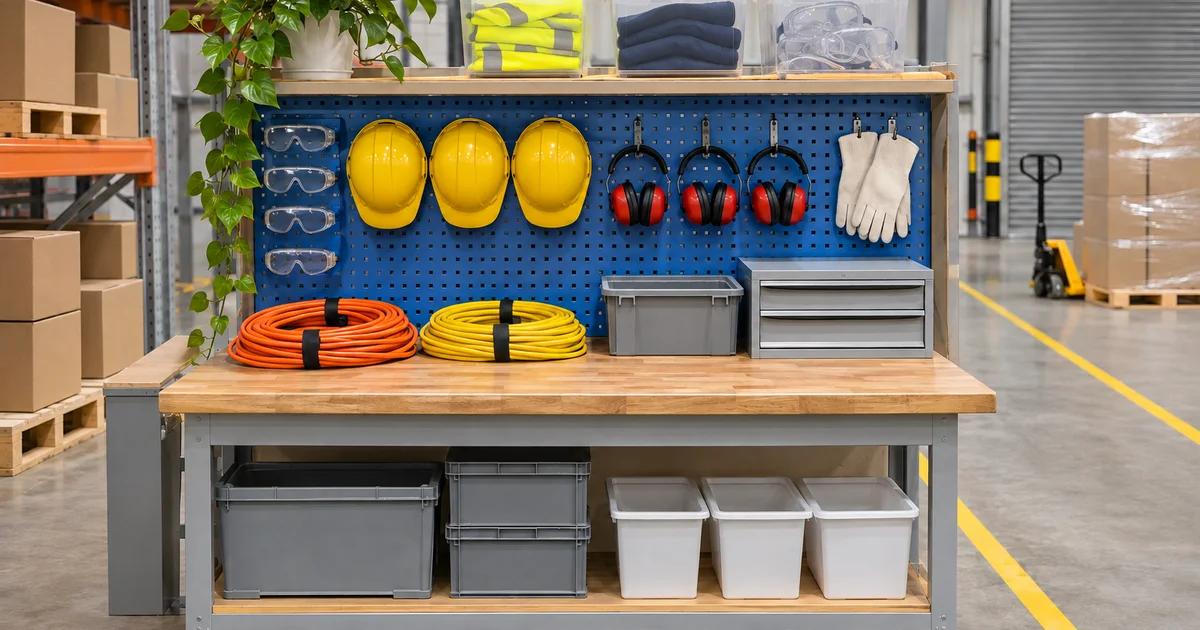
A risk assessment for a small business is a careful look at what could harm people in your workplace, followed by sensible steps to stop it happening. The Health and Safety Executive (HSE) sets it out as five steps: identify the hazards, assess the risks, control the risks, record your findings and review the controls.
Quick answer: To do a risk assessment for a small business, walk round your workplace and list what could cause harm, decide who could be hurt and how seriously, put controls in place, write down your significant findings if you employ five or more people, and review it whenever something changes.
Key Takeaways
It is a legal duty. Every employer must assess the risks their work creates.
There are five steps: identify hazards, assess the risks, control them, record your findings and review.
Five or more employees? You must record your significant findings in writing.
You can often do it yourself. Most small, low-risk businesses do not need a consultant.
Controls matter more than paperwork. The aim is a safer workplace, not a thicker folder.
What Is a Risk Assessment and Who Needs One?
HSE describes risk management as a step-by-step process for controlling health and safety risks caused by hazards in the workplace. A hazard is anything that could cause harm, such as a trailing cable, a cleaning chemical or a heavy box. The risk is how likely it is that someone will be hurt, and how badly.
The legal requirement comes from the Management of Health and Safety at Work Regulations 1999, and it applies to every employer. If you are self-employed and your work could put other people at risk, the law applies to you as well.
Getting it wrong can be expensive as well as dangerous. Our article on what health and safety failures cost looks at the consequences for businesses.
The Five Steps of a Risk Assessment for a Small Business
Step 1: Identify the hazards
Walk round your workplace and look at what could reasonably cause harm. HSE suggests thinking about how people work and how equipment is used, what chemicals and substances are present, which work practices are safe or unsafe, and the general state of your premises.
Look back at your accident and ill-health records, and remember the jobs that do not happen every day, such as maintenance and cleaning. Ask your staff too. They do the work, so they often notice things you would miss.
Step 2: Assess the risks
For each hazard, think about who might be harmed and how. That includes employees, contractors, visitors and members of the public. Some people may need extra thought, such as young workers, new or expectant mothers and people with disabilities.
Then decide how likely harm is and how serious it could be. This tells you which hazards need attention first.
Step 3: Control the risks
Ask first whether you can get rid of the hazard altogether. If you cannot, look at how to make harm unlikely. HSE lists the options in this order:
Redesign the job.
Replace the materials, machinery or process.
Organise the work to reduce exposure.
Put practical safe-working measures in place.
Provide personal protective equipment and make sure people wear it.
Protective equipment comes last because it only protects the person wearing it, and only when it is worn properly. You are not expected to remove every risk, but you must do what is reasonably practicable.

Step 4: Record your findings
If you employ five or more people, you must record your significant findings. The record should cover the hazards, who might be harmed and how, and what you are doing to control the risks.
Keep it short and practical. HSE warns against relying purely on paperwork, because your main priority should be to control the risks in practice. It also publishes a free risk assessment template and example assessments on its website.
Step 5: Review the controls
Check that the controls you have put in place are working. Review the assessment if they may no longer be effective, if there are changes in the workplace such as new staff, a new process or new substances or equipment, or if workers report problems, accidents or near misses. Update your record with any changes.
Risk Assessment Steps at a Glance
Step |
What to do |
Small business example |
|---|---|---|
1. Identify hazards |
Walk round and note what could cause harm |
Boxes stored on a high shelf in the stock room |
2. Assess the risks |
Decide who could be hurt and how seriously |
Staff could be struck by a falling box or strain their back |
3. Control the risks |
Remove the hazard or make harm unlikely |
Move heavy stock to waist height and provide a step stool |
4. Record your findings |
Write down significant findings if you employ five or more |
A one-page note of the hazard, who is at risk and the control |
5. Review the controls |
Check it works and update after any change |
Look again when the stock room is reorganised |
Do You Need a Consultant to Do It?
Often not. HSE says that as an employer you must appoint a competent person to help you meet your health and safety duties, and that if there is a competent person within your workforce you should use them in preference to someone from outside. In a small office or shop, that may well be you. For more on this, read our article on benefits of using a business consultant.
Outside help is worth considering if your work is complex or higher risk, or if nobody in the business has the knowledge. If you do bring someone in, our guide on what to check before booking a health and safety adviser covers the checks to make. Remember that the legal duty stays with you as the employer.
Common Mistakes to Avoid
Copying a template without looking at your own workplace. Examples are a starting point, not the finished job.
Listing every trivial hazard. Concentrate on the things that could really hurt someone.
Filing it and forgetting it. An assessment that is never reviewed soon stops describing the workplace.
Leaving staff out. The people doing the job know where the real problems are.
Relying on protective equipment first. It should be the last line of defence, not the first.
How Risk Assessment Fits With the Rest of Your Business
A written risk assessment is often asked for by others. Larger customers may want to see it before they give you work, and health and safety pre-qualification schemes ask for it too. Our SSIP accreditation guide explains how those schemes work.
Insurers may also ask about your health and safety arrangements. If you employ staff you will usually need employers’ liability insurance, and our guide to the cost of business insurance in the UK explains the main types of cover.
Frequently Asked Questions
Is a risk assessment a legal requirement for a small business?
Yes. Every employer has to assess the risks their work creates, whatever the size of the business. The requirement comes from the Management of Health and Safety at Work Regulations 1999.
Do I have to write my risk assessment down?
If you employ five or more people, you must record your significant findings. With fewer than five you do not have to, but a short written record is still useful if anyone later asks what you did.
Can I do a risk assessment myself?
In many small, low-risk businesses, yes. HSE says to use a competent person from within your own workforce where you have one. You may need outside help if your work is complex or higher risk.
How often should a risk assessment be reviewed?
There is no fixed interval in the HSE guidance. Review it when something changes, such as new staff, equipment, substances or processes, and after any accident, near miss or reported problem.
Do I have to remove every risk?
No. HSE says you are not expected to eliminate all risks, but you must do everything reasonably practicable to protect people from harm. That means weighing the level of risk against the cost, time and trouble of controlling it.
A risk assessment does not need to be complicated. Walk round, decide what matters, deal with it, write down what you found and look again when things change. If you have a question about this guide, or a correction or topic to suggest, you can reach our editorial team through the Fin-Tech UK contact page.
HSE’s full guidance, template and examples are free on its website under managing risks and risk assessment at work.